
Education
Takeshi Mihashi was born in Kurashiki, on November 11th in 1912, as the second son to Tamami Mihashi, a renowned physician. Tamami's cultural and social activities included poetry and Nanga (南画) style Japanese painting, creating a dense milieu of creative intellectualism for Takeshi to grow up in. He was a very inquisitive child. By the time he was a teenager he was painting with oil on canvas.
At the age of 20 Takeshi moved to Tokyo to study oil painting at the Tokyo Fine Arts School (東京美術学校, Tōkyō Bijutsu Gakkō). Among Takeshi's instructors was Takeji Fujishima, today widely credited with developing impressionism and romanticism in the Japanese Western Style. While enrolled, Takeshi started contributing to the annual exhibitions of the avant-garde Independent Arts Association (独立美術協会) in 1936. He graduated in 1938 and stayed in Tokyo. Takeshi created this still life (left) and self portrait (right) while in middle school.
教育
三橋健は1912年11月11日に倉敷で生まれ、名医の三橋玉見の次男でした。 父の活躍の幅は詩作や南画(南画派)にも及び、健は創造性や知性に満ちた環境で育ちます。幼い頃からとても好奇心が旺盛で、中学生の頃には油絵を描いています。
20歳の頃三橋は上京し、東京美術学校の油彩学科に入学します。2年生から、今日では日本西洋画における印象派とロマン主義の発展を著しく牽引したと評価されている、藤島武二のクラスで指導を受けています。在学中、三橋は1936年から前衛美術を広める独立美術協会の年次展覧会に出展し始めます。1938年に三橋は卒業した後も、東京に留まって活動を続けます。静物画(左)と自画像はいずれも健が中学生の頃作成したものです。

Anchor Making
Takeshi initially gravitated towards Surrealism. His deep connection to the movement is chiefly evidenced by him being among the 41 founding members of the progressive Association for Art and Culture (美術文化協会) in 1939. Takeshi also had plans to go to Paris to develop his profile like some of his peers and role models.
Illness and passing of his father in the same year, however, brought about a sharp and permanent change of trajectory. Takeshi returned to live in Kurashiki and abruptly withdrew from the Association for Art and Culture, right before its first ever yearly exhibition took place in early 1940. Soon after, the association and its members began suffering crushing idelological repression.
Takeshi's first series, Anchor Making (いかりつくり), is informed by a childhood memory of an iron workshop, as well as sketches and photographs made during a visit to an anchor manufacturer in 1936.
いかりつくり
初期の健はシュルレアリズムに惹かれています。彼のこの運動との関わり深いです。1939年に当時の前衛派の種である美術文化協会の41名の創設メンバーには三橋健の名も連ねられている。また、仲間や先輩の進路に倣い、健も自らの美術を発展させるためにパリに行く夢も持っています。
ただし父の病気と同年の死により、健の人生の軌道は急に変わります。健は倉敷に戻り、1940年初頭に開催された美術文化協会初の年次展覧会直前に、協会から突如退会します。その後間も無く、協会とそのメンバーは国による思想の監視と弾圧を受け始めます。
三橋の初期のシリーズである「いかりつくり」は子供の頃の小さな鍛治屋の思い出に起因し、そして1936年に一週間ほど、福山市にある錨の製造工場に立ち会った際に作成したスケッチや写真に基づきます。

Abstraction
Takeshi took on a job assisting in scientific microscopic imagery of fungi and went on to survive the Pacific War as a civilian. An injury he had suffered during his youth from botched intestinal surgery had made him unfit for military service and Kurashiki was one of the few densely populated areas in Japan spared from indiscriminate aerial attacks.
Producing scientific representations of nature and his friendship to cubist painter Kazuo Sakata (1885-1956), leader of the Avantguarde Okayama (AGO) group, inspired Takeshi's cubist and abstract paintings, that are predominant in his work during the early post-war/occupation years.
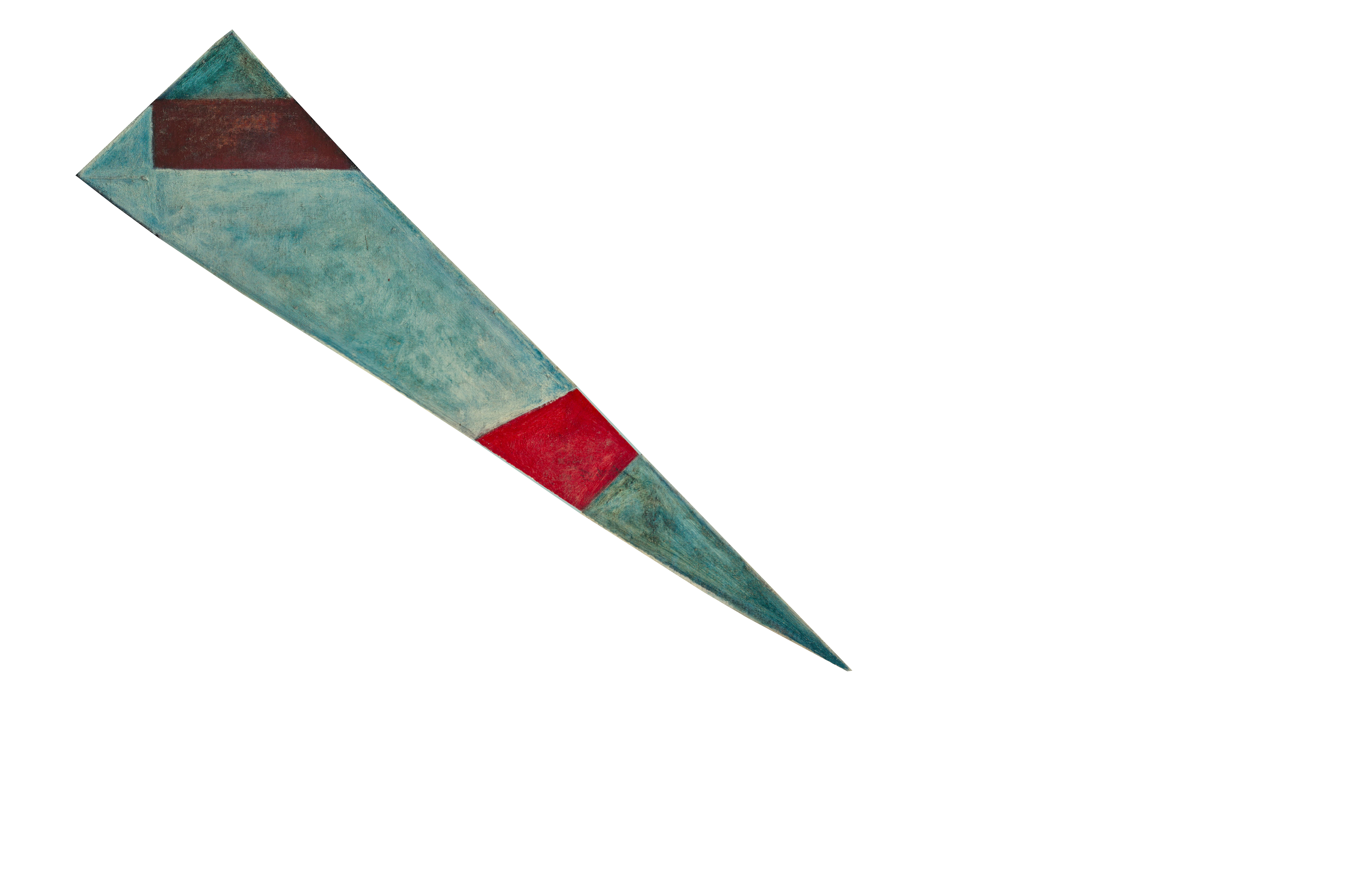
Composition A was one of his award-winning entries to the 25th annual exihibition of the Kokugakai. The arrangement shows his transition from cubism to independently complete abstraction.
抽象
健は研究所の助手の仕事に就き、顕微鏡を用いて菌類の画像を作成し、民間人として生活しながら太平洋戦争を生存します。若い頃に受けた腸手術が失敗して健が負傷しているため、健は軍務に不適格とされます。そして倉敷は日本の人口密集地帯の中で珍しく無差別空襲から比較的免れます。
自然現象を科学的に描画する経験や、親友であるキュビズムの画家坂田一男(1885-1956)の影響も受けて、健はキュービズムと抽象画の作品を展開します。これらの絵は健の戦後初期・占領期における主要な特徴となります。
コンポジションAは、国画会第25回年次展で受賞した健のエントリーのひとつとして、健がキュビズムから完全抽象へと移行した過程を示しています。




Demon and Woman
Takeshi became a member of the Kokugakai (国画会) in 1955. He became convinced that the Japanese people originate from a history of sea-faring migration from South to North, and developed a motivation to accurately represent and conserve this people's culture through his art.
One one the series in pursuit of this vocation combines a demon with a woman (鬼と女). Having dealt earlier with the theme in smaller abstract and calligraphic works, Takeshi escalates the subject in large paintings, depicting a male figure with a mask commonly associated with the spring festival, and a nude but distorted female figure.
The sexuality is explicit and active but conveys no relatable graeco-roman eroticism. To the contrary, Takeshi was likely aiming to discover a visual expression of sexual affection that pre-dates Western influence, with the demon acting as the protector of a Japanese mythological femininity (Himiko).
鬼と女
1955年に国画会の会員となった健は、日本人の起源が南方から北方への海洋民的な移動の歴史にあると確信し、その民族の文化を自らの芸術によって正確に表現し、保全していく動機を強めています。
その一つが「鬼と女」です。すでに以前から、小規模の書道をも引用した抽象画で同じ標題を扱っていた健は、この主題を大画面の絵画でさらにエスカレートさせます。節分に伴う仮面をまとった男性像と、裸でありながら歪められた女性像が描きます。
そこでの性表現は露骨で能動的だが、ギリシャ・ローマ的なエロティシズムのような親しみやすさは感じられない。むしろ健は、西洋の影響以前に存在していた性的イメージを発見しようとして、つまり、日本の神話から導いた理想的な女性(卑弥呼)に対して鬼はその保護神として働きます。

Circus and Wrestling
In another series Takeshi focusses on the enduring athletic body interacting with others, defying gravity, controlling momentum and maintaining balance.
While in title (Circus, Women's Wrestling) he references the social spectacle, stage and audience are omitted in these paintings. Thus the viewer becomes a first row member of the audience, resulting in a deep sense of spatial immersion and physical proximity.
Detailed distortions in the bodily physique then serve to trace the origin and linear direction of the physics. They hint at what the before and after look like, adding a sense of granular temporality comparable to frames in slow motion video.
サーカス・女子プロレス
これらのシリーズで健はヒトの身体がどのように重力に逆らい、動力をコントロールし、バランスを維持するか、そして他のヒトとの協力と闘いの様子をも見つめます。
標題(サーカス・女子プロレス)では社会的なイベントを示唆していますが、、絵画の中ではステージと観客は省かれています。こうして絵の観賞者は最前列の観客となり、空間的な没入感と身体的な近接感が強く生み出されます。
登場人物の体格に現れる詳細な歪みは、物理現象の起点と線形方向を追跡する役割を果たします。ことによって描画の「前」と「後」がどのように見えるかをほのめかし、スローモーション映像のフレームに匹敵する高い粒度の時間感覚を作品に与えます。

Snake Rope
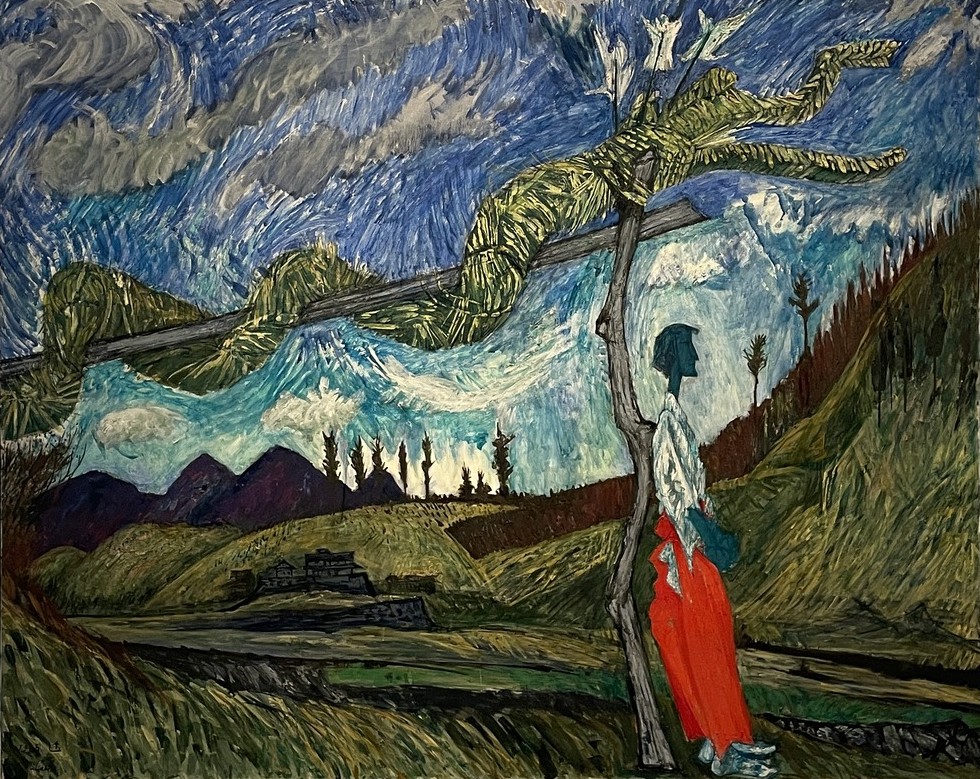
In this series Takeshi wanted to express "worship" (信仰)from what he could observe as living and existing cult practised in his social surroundings. The Nawahebi (snake rope) here pertains to an annual local festival (at Tsunagoo Shrine in Tesseicho, Niimi) praying for a good harvest and safety, dating back to the Kamakura era.
According to legend a gigantic snake was slain because it was feeding on cattle and horses. Its carcass then started poisoning the river, until its spirit was compelled and confined into a new shrine and the rope made in its image. Now every year, on the first Sunday in December, last year's rope is replaced with a new one.
Takeshi composes the snake rope and the Miko, a Shinto shrine maiden tasked with various ritual acts and services. With the Miko's easily recognizable attire harmonically in place, he finds a relatable expression of the vernecular religious demand for ritual purification.
縄蛇
本シリーズで三橋は、彼自身の社会環境で観察できる実際に行われている宗教的儀礼を手がかりに、「信仰」そのものを表現しようとしています。ここで描かれる縄蛇(ナワヘビ)は、収穫と家の安全を祈る新見市哲西町上神代の綱之牛王神社の、鎌倉時代からの蛇形祭をテーマにしています。
伝説によれば、かつて巨大な蛇が牛や馬を食い荒らしていたため退治されました。その死骸は川を汚し始めましたが、やがて蛇の霊は鎮められ、新しい祠と、その姿をかたどった縄に封じ込められました。それ以来、毎年12月の第一日曜日には、前年の縄が新しい縄と取り替えられることになりました。
三橋は、縄蛇とさまざまな儀式や奉仕を担う巫女を構図にし、巫女の一目で分かる衣装を調和的に配置することで、庶民の宗教的要請を親しみやすく表現します。

Peaches
The climate in and around Kurashiki and Okayama is well suited for growing high quality peaches at scale. Takeshi's father was friends with Masuta Koyama (1861-1924), a renowned horticulturist famed for improvements in producing grapes, pears and peaches and Takeshi took some pride in that connection.
Takeshi dedicated voluminous exhibitions entirely to peaches (in 1970: 57 works, then in 1975: 150 pieces). Each one is painted with precision and care during summer, when the fruit is seasonal, from a real product. Similarly, Takeshi painted hydrangea and other flowers.
The japanese style piece in the bottom center quotes Hölderlin (Kleists Tod): "Und darum ist der Güter Gefährlichstes, die Sprache, dem Menschen gegeben [...] damit er zeuge, was er sei." (And thus man was given the most perilous of goods, language, [...] so that he may bear witness to what he is.)
桃
倉敷と岡山周辺の気候は、大規模に高品質の桃を育てるのに最適です。健の父は、有名な園芸家であった小山益太山(1861-1924)と友人であり、彼はブドウ・梨・桃の栽培に著しい改良をもたらしたことで知られています。健はそのつながりを誇りに思っています。
健は、桃の絵画に完全に専念した大規模な展覧会を開催します(1970年:57点、1975年:150点)。各作品は、桃の旬である夏に実際の果実を素材に、精密かつ丁寧に描き上げられています。似たように、健はアジサイや他の花々も同様に数多く描きます。

Kurashiki
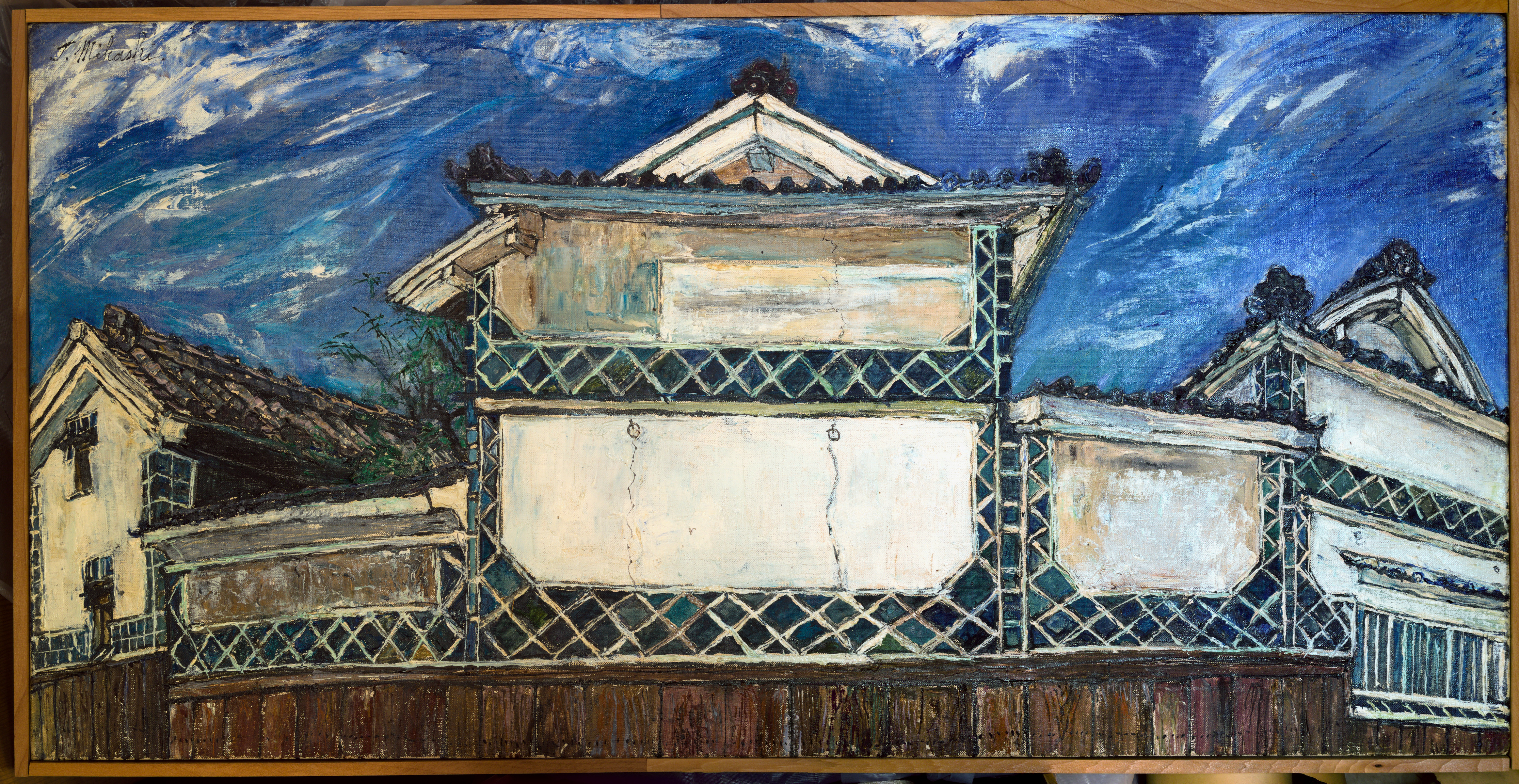
Paintings and drawings of his hometown are a lifetime recurrent in Takeshi's work. The city's architecture in particular of its characteristic storehouses is the result of prosperous economic activity in somewhat defiant compliance with building codes and Takeshi had a keen interest in the local history behind it.
The fairness and objectivity of Takeshi's vision gradually overpowered earlier impressionist impulses. Takeshi's mature Western and Japanese style drawings, at times produced in lockstep, dutifullly document cracks and discoloration of decaying façades, yet without forcing a generic vanitas signal. Instead he simply succeeds in making Kurashiki's odd and unfamiliar structures feel like the home they were to him, even to unaccustomed viewers.
This painting of an off-street section in Achi, its architecture much in line with local tradition, was made in 1973.
倉敷
三橋の作品には、故郷を描いた油絵や日本画が生涯を通じて頻繁に登場します。倉敷の建築は、特にその特徴的な倉庫に関してその経済的繁栄と建築基準への準拠を背景に極めて独特に形成されたものであり、その裏にある地域史に三橋は大きな関心を抱いています。
健の視点の公平さと客観性は、初期の印象派的衝動を徐々に凌駕していきます。成熟した健の街風景の油絵と日本画は、時に平行して制作され、朽ちゆく外壁のひび割れや変色を忠実に記録しているものの、画一的なバニタス(虚無的)信号を押し付けません。むしろ、彼は、倉敷の奇妙で独特な建造物を、未経験者にも自らが見慣れた故郷かのように感じさせることに成功します。
阿知の商店街の横通りを描いたこの絵は、現地の伝統にかなり沿った風景を示すもので、1973年に制作されました。
Pine Trees
Paintings that more or less isolate pine trees became a distinct feature of Takeshi's late portfolio. Their branches are like flames blazing through awesomely dramatic skies, expressing the triumphalist vitality that Takeshi admired in the tree's nature.
He died by suicide on April 30th 1977. While motivation and causality are unclear, it is known that he had experienced periods of poor mental health throughout his life. Takeshi left behind his wife Keiko and his second daughter Toyoko.
松
単に一輪の木だけを孤立させた作品が、健の後期ポートフォリオの特徴になります。松の木の枝が炎のように綺麗な空に広がることで、三橋は自然の誇らしい生命力に対する関心を表現しています。
三橋健はは1977年4月30日に自殺により亡くなりました。動機や因果は明確にはされていませんが、彼は生涯にわたり精神的健康が不安定な時期を経験していたことが知られています。三橋は妻の敬子と次女の豊子を残していました。
